Investing vs. Saving: Which Makes You Richer?
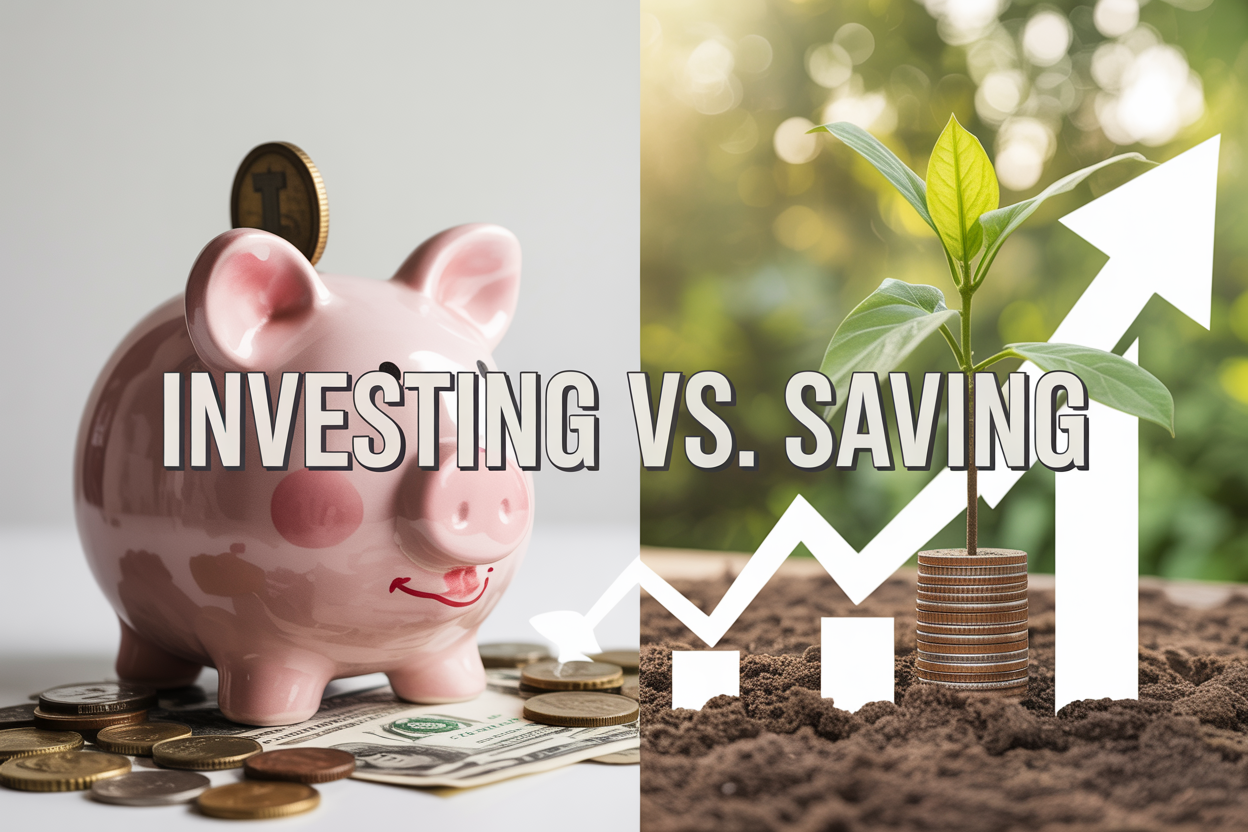
Most people wonder whether they should focus on saving money or investing it to build wealth faster. This guide is for anyone looking to make smarter financial decisions and maximize their money's potential over time.
Saving keeps your money safe but offers minimal growth, while investing carries more risk but can generate significantly higher returns. The choice between investing vs. saving often determines whether you'll reach financial independence in decades or years.
We'll break down the core differences between these two approaches and show you the mathematical reality of how compound interest works differently for savers versus investors. You'll also discover when saving makes the most sense for your situation and learn strategic investment methods that actually build lasting wealth.
Understanding the Core Difference Between Saving and Investing

How saving preserves your money with guaranteed returns
Saving puts your money in secure accounts like high-yield savings or certificates of deposit, where banks pay you predictable interest rates. Your principal stays protected by FDIC insurance up to $250,000, making it virtually risk-free. The trade-off is lower returns - typically 1-5% annually - which barely keeps pace with inflation.
Why investing grows wealth through compound interest and market gains
Investing channels your money into assets like stocks, bonds, and real estate that can appreciate significantly over time. The stock market averages around 10% annual returns historically, allowing your money to double roughly every seven years through compound growth.
| Strategy | Average Returns | Risk Level | Time Horizon |
|---|---|---|---|
| Savings | 1-5% | Very Low | Any |
| Investing | 7-10% | Moderate-High | 5+ years |
The risk-reward relationship that separates both strategies
The fundamental difference lies in risk tolerance and time commitment. Saving guarantees your money will be there tomorrow but won't build substantial wealth. Investing accepts short-term volatility for long-term growth potential, making it the proven path to financial independence for patient investors.
The Mathematical Truth Behind Wealth Building

How inflation erodes your savings purchasing power over time
Money sitting in traditional savings accounts loses value every single year due to inflation. With average inflation rates around 3% annually, your $10,000 today will only buy about $7,400 worth of goods in 10 years. Most savings accounts offer measly 0.5% interest rates, meaning your money actually shrinks in real purchasing power. This invisible wealth erosion happens silently while you sleep.
The compound interest advantage that makes investing superior for long-term wealth
Investing harnesses compound growth that transforms modest contributions into substantial wealth over time. While savings accounts compound at 0.5%, stock market investments historically return 10% annually. This difference creates exponential wealth gaps - $500 monthly invested at 10% grows to $380,000 in 20 years, while the same amount saved at 0.5% reaches only $123,000.
Real-world examples showing 20-year savings vs investment outcomes
| Strategy | Monthly Amount | 20-Year Total | Final Value |
|---|---|---|---|
| Savings Account (0.5%) | $500 | $120,000 | $123,000 |
| Stock Market (10%) | $500 | $120,000 | $380,000 |
| High-Yield Savings (2%) | $500 | $120,000 | $147,000 |
The investment approach delivers over three times more wealth than traditional savings. Even conservative investment portfolios averaging 7% returns generate $245,000 - double the savings outcome. These numbers demonstrate why wealthy individuals prioritize investing over saving for long-term goals.
Why starting early amplifies your wealth-building potential
Time multiplies investment returns through compound growth's snowball effect. Starting at age 25 versus 35 can mean hundreds of thousands more in retirement wealth. A 25-year-old investing $300 monthly until retirement accumulates $1.2 million, while someone starting at 35 with the same contribution reaches only $540,000. Every year you delay investing costs you exponentially more wealth down the road.
When Saving Makes Perfect Financial Sense

Building Your Emergency Fund for Financial Security
Your emergency fund serves as your financial safety net, protecting you from life's unexpected curveballs like job loss, medical bills, or major home repairs. Most financial experts recommend saving three to six months of living expenses in a highly liquid, low-risk account. This money needs to be instantly accessible when disaster strikes, making traditional savings accounts or high-yield savings accounts your best bet.
Short-Term Goals That Require Guaranteed Money Access
When you're planning to buy a car next year or saving for a wedding in 18 months, investing that money could backfire spectacularly. Stock markets can drop 20% or more in short timeframes, potentially derailing your plans. For goals under five years, prioritize capital preservation over growth through CDs, money market accounts, or Treasury bills.
High-Interest Debt Elimination as Your Top Priority
Before considering any investment strategy, tackle high-interest debt aggressively. Credit card debt averaging 18-24% annual interest rates will outpace most investment returns. Paying off this debt guarantees an immediate return equal to the interest rate you're avoiding. This risk-free "investment" in debt elimination often beats market performance while improving your overall financial health and credit score.
Strategic Investment Approaches That Build Real Wealth

Low-cost index funds for beginner wealth builders
Index funds track entire market segments with minimal fees, typically 0.03% to 0.20% annually. These passive investments automatically diversify your money across hundreds or thousands of companies, eliminating the need to pick individual stocks. Popular options include total stock market funds, S&P 500 funds, and international index funds that provide instant global exposure.
Diversification strategies that minimize risk while maximizing returns
Smart diversification spreads investments across asset classes, geographic regions, and company sizes. A balanced portfolio might include 60% stocks (domestic and international), 30% bonds, and 10% alternative investments like REITs. This approach reduces volatility while capturing growth opportunities across different market conditions.
| Asset Class | Allocation Range | Purpose |
|---|---|---|
| Domestic Stocks | 40-60% | Growth engine |
| International Stocks | 20-30% | Global exposure |
| Bonds | 20-40% | Stability buffer |
| REITs/Alternatives | 5-15% | Inflation hedge |
Dollar-cost averaging to reduce market timing stress
Regular monthly investments remove emotion from investing decisions. Whether markets rise or fall, consistent contributions buy more shares when prices drop and fewer when expensive. This mechanical approach has historically outperformed trying to time market peaks and valleys, especially over periods exceeding five years.
Tax-advantaged accounts that accelerate wealth accumulation
Retirement accounts offer powerful tax benefits that compound over decades. 401(k) contributions reduce current taxable income while growing tax-deferred until retirement. Roth IRAs provide tax-free growth and withdrawals in retirement. HSAs offer triple tax benefits: deductible contributions, tax-free growth, and tax-free medical withdrawals.
Annual Contribution Limits (2024):
-
401(k): $23,000 ($30,500 if 50+)
-
IRA/Roth IRA: $7,000 ($8,000 if 50+)
-
HSA: $4,150 individual, $8,300 family
Real estate investment options for portfolio expansion
REITs provide real estate exposure without property management hassles. These publicly traded companies own income-producing properties and distribute 90% of profits as dividends. Real estate crowdfunding platforms allow smaller investors to participate in commercial properties with minimum investments starting at $500. Direct rental property ownership offers control but requires significant capital and active management.
Creating Your Optimal Money Strategy for Maximum Wealth

The ideal savings-to-investing ratio for different life stages
Your money allocation should shift as life unfolds. In your twenties and thirties, aim for 80% investing and 20% emergency savings since time works magic with compound growth. Your forties call for a more balanced 60-40 split between investments and liquid savings as responsibilities mount. Once you hit your fifties and beyond, flip to 40% investing and 60% safer assets as retirement approaches.
| Life Stage | Emergency Fund | Investments | Focus |
|---|---|---|---|
| 20s-30s | 20% | 80% | Aggressive growth |
| 40s | 40% | 60% | Balanced approach |
| 50s+ | 60% | 40% | Capital preservation |
How to transition from saver to investor without losing security
Start small and build confidence through dollar-cost averaging into index funds while keeping your emergency fund intact. Open a separate investment account and begin with just $100 monthly to test the waters. Gradually increase your investment contributions as you witness market fluctuations without panicking. This approach lets you maintain your safety net while slowly building wealth through market participation.
Balancing liquidity needs with long-term growth objectives
Smart money management means keeping 3-6 months of expenses in high-yield savings accounts for immediate access while investing the rest for growth. Consider a tiered approach: checking account for monthly expenses, savings for emergencies, and investment accounts for everything else. CDs or money market accounts can bridge the gap between liquid savings and long-term investments, offering slightly better returns while maintaining reasonable access to your funds when unexpected opportunities arise.

Your money has two paths: the safety of savings or the growth potential of investments. Saving protects what you have and covers your immediate needs, while investing multiplies your wealth over time through compound returns. The math is clear - money sitting in savings accounts loses buying power to inflation, but smart investments can turn modest amounts into significant wealth over the years.
The winning approach isn't choosing one over the other. Build your emergency fund first, then let your extra money work harder through diversified investments. Start with index funds or ETFs if you're new to investing, and gradually increase your contributions as your income grows. Your future self will thank you for making your money grow instead of just keeping it safe.

没有评论:
发表评论